|
Inosilicates Gallery
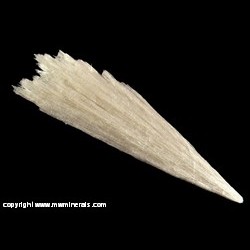
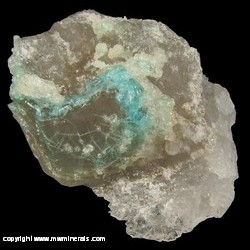
Inosilcates are called the chain silicates and are composed of two classes, the single chain and double chain silicates.
The single chain silicates have SiO4 tetrahedrons which share two oxygens with two other tetrahedrons forming a virtually endless chain. This makes for a ratio of silicon to oxygen of 1:3. The tetrahedrons alternate to the left and to the right of the axis formed by the linked oxygens. More complex chains can form a spiral. In cross section, the chain forms a trapezoid. It is this shape which produces the angles between the faces of the crystals and the directions of cleavage.
The double chain silicates have two single chains which lie next to each other. An oxygen ion links each of the right sided tetrahedrons in the left chain with the left sided tetrahedrons in the right chain. Because there is an extra shared oxygen for every four silicons, the ratio of silicon to oxygen is reduced to 4:11. The double chain is a chain of six sided rings. It has a similar cross section to a single chain, except the trapezoid is longer, which produces a different set of angles.
The cleavage of the chain silicates occurss between the chains; the chains are not broken. This produces a prismatic cleavage. For single chained silicates, the two directions of cleavage are close to 90 degrees which forms almost square cross sections. For double chain silicates, the cleavage angle is close to 120 and 60 degrees which forms rhombic cross sections.
Single chain silicates: Neptunite, Okenite, Pectolite, The Pyroxene group (Aegerine, Augite, Diopside, Spodumne (Kunzite, Hiddenite), Jadeite and others), Rhodonite, Serandite, Shattuckite, and others
Double chain silicates: Amphibole group (Actinolite, Edenite, Cummingtonite, Hornblende, Inesite, Tremolite, Richterite, Glaucophane and others), Astrophyllite, Babingtonite, Charoite, Inesite, Plancheite and others
minerals in alphabetical order by first letter only
click on the title link or photo to proceed to a specimen's page
A
6624
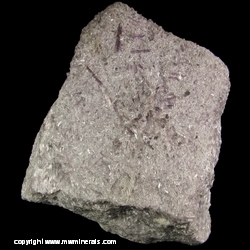
Astrophyllite and Aegerine in Nepheline Syenite Matrix
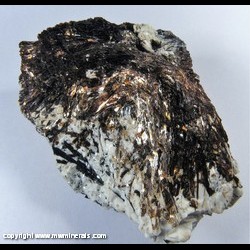
Khibiny Massif, Murmansk Oblast, Russia
Ex. Norm Woods
9.3 x 7.3 x 5.2 cm
$75
|
4599
Green Quartz (Included Hedenbergite), Hendenbergite, Calcite, Pyrite
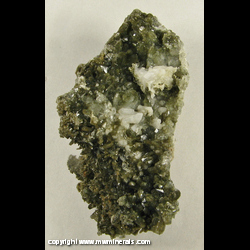
Mina San Antonio, East Camp, Santa Eulalia Dist., Mun. de Aquiles Serdan, Chihuahua, Mexico
7.8 x 4.8 x 4.3 cm
$50
|
|
E
6029
Elpidite, Manganoan Calcite
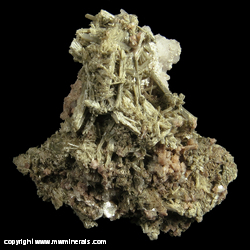
Poudrette Quarry, Mont Saint-Hilaire, Rouville RCM, Monteregie, Quebec, Canada
Na2ZrSi6O15·3H2O
4.5 x 4.2 x 4.6 cm
$75
|
|
|
H
J
4050
Augite variety Jeffersonite - 3 pieces
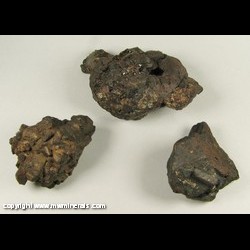
Sterling Hill, Ogdensburg, Franklin Mining District, Sussex Co., New Jersey
Ex. Steve Pullman
x x cm6.7 x 4.1 x 3.3 and 3.7 x 3.6 x 2.3 and 4.2 x 3.2 x 3 cm
$80
|
|
|
K
S
T
3515
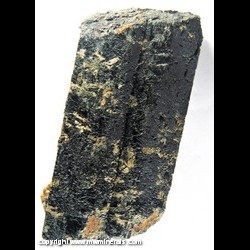
Tremolite
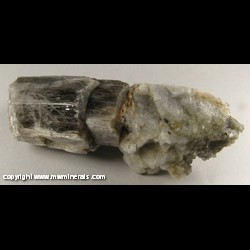
Smoky Tremolite Occurrence, Monmouth Twp., Haliburton Co., Ontario, Canada
8.3 x 4 x 3.2 cm
$65
|
|
|
U
4349
Uralite, Epidote
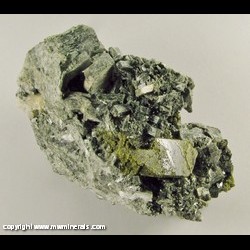
Calumet Mine, Turret District, Chaffee Co., Colorado, USA
7.8 x 6.5 x 4.5 cmEpidote XL is 2.7 long and 1.1 cm in width
$40
|
3339
Uralite and Epidote with Calcite
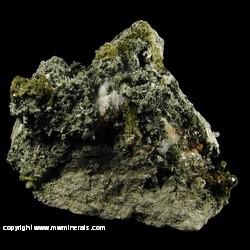
Calumet Mine, Turret District, Chaffee Co., Colorado, USA
11.5 x 7.5 x 5.5 cmLargest XL 7 x 3 x 1 mm
$30
|
|
Specimens which have this class of minerals as an associated mineral
6957
Aegerine with minor Astrophyllite in Nepheline Syenite Matrix
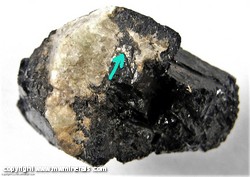
Barkevikskjaer, Langesundsfjorden, Larvik, Vestfold og Telemark, Norway
Type Location
(K,Na,Ca)7.5(Mn,Mg)49 Si72O168(OH)50·nH2O
Ex. Steve Pullman
5.1 x 3.5 x 2.2 cm
$25
|
6776
Agrellite, Eudialyte, Albite, Calcium
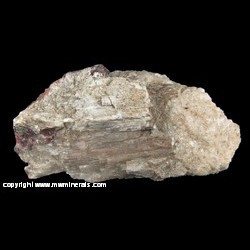
Kipawa alkaline complex, Les Lacs-du-Temiscamingue, Temiscamingue RCM, Abitibi-Temiscamingue, Quebec, Canada
Type Location
Ex. Roy Virtue
9 x 6.2 x 4.6 cm
$75
|
6744
Dioptase, Plancheite
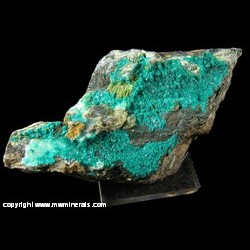
Bonanza Mine (Harquahala Mine), Martin Peak, Salome, La Paz County, Arizona
Ex. Steve Pullman
6 x 3.8 x 3.2 cm
SOLD
|
6934
Chromium Grossular Garnet, Calcite, Diopside, Chromite
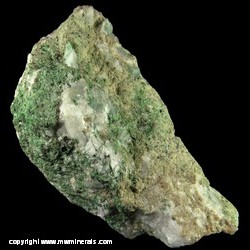
Jeffrey Mine, Asbestos, Les Sources RCM, Estrie, Quebec, Canada
1960s
11.1 x 7.6 x 5 cm
$45
|
6977
Hubeite (TL) and Inesite on Quartz

Fengjiashan Mine, Daye Co., Huangshi, Hubei, China
Type Location
Ca2Mn2+Fe3+Si4O12(OH)·2H2O
Ex. S. Pullman
8 x 4.9 x 5.8 cm
$50
|
6743
llvaite, Quartz, Hedenbergite
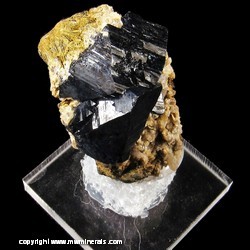
Laxey Mine,
Ex. Steve Pullman
3.6 x 2.6 x 2.4 cm
$45
|
6371
Ilvaite, Arsenopyrite, Hedenbergite, Tremolite
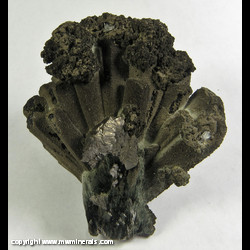
Huanggang Mine, Inner Mongolia, China
6.3 x 5.6 x 4.6 cm
$100
|
6064
Ilvaite coated with Hedenbergite, Arsenopyrite
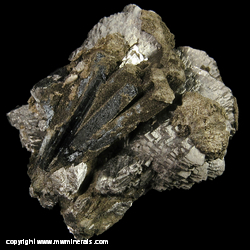
Huanggang Mine, Inner Mongolia, China
4.5 x 3.8 x 3.2 cm
$35
|
4096
Blue Quartz, Magnesio-Riebeckite
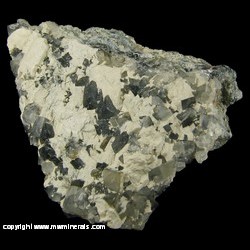
Grubach, Golling, Salzburg, Austria
1 cm grid on 3rd picture
$45
|
6924
Rhodochrosite, Elpidite, Leifite, Calcite, Albite
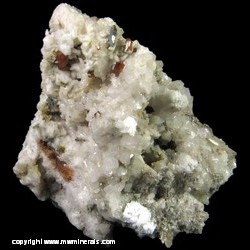
Poudrette Quarry, Mont Saint-Hilaire, Rouville RCM, Monteregie, Quebec, Canada
Elpidite - Na2ZrSi6O15·3H2O, Leifite - Na7Be2(Si15Al3)O39(F,OH)2
5.2 x 5.8 x 4.4 cmlargest rhodochrosite crystals is 5 mm on longest edge
$75
|
6038
Rhodochrosite, Elpidite, Leifite, Calcite, Albite
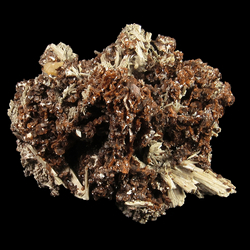
Poudrette Quarry, Mont Saint-Hilaire, Rouville RCM, Monteregie, Quebec, Canada
Elpidite - Na2ZrSi6O15·3H2O, Leifite - Na7Be2(Si15Al3)O39(F,OH)2
5.1 x 4.4 x 4.4 cm
$150
|
5192
Sodalite Crystals, Hornblende
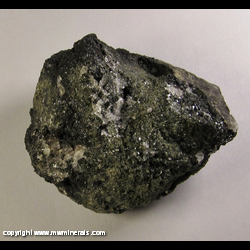
Monte Somma, Somma-Vesuvius Complex, Naples Province, Campania, Italy
Ex. University of Michigan - 1933, Ex. Cureton Mineral Co., Ex. Southwest Mineral Co., Ex. Carnegie Museum - White collection
5.7 x 4.7 x 3.8 cm
$50
|
4220
Rubellite Tourmaline, Spodumene, Quartz
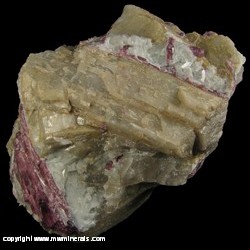
Haapaluoma pegmatite, Peraseinajoki, Seinajoki, Finland
Ex.H. R. McBroom, from a trade with Karl Alasaprela in 1977
8.2 x 6.3 x 3.6 cm
$85
|
|
|
|
Other Galleries
By Special Interest
By Mineral Species or Group
By Geographic Region
Systematic Galleries
By Price
|
|
|